

Table of Contents
 Set as a preferred Google source
You applied for a role you really want. Maybe you nailed the interview. And now, silence. A week goes by, then ten days, and you’re staring at your inbox wondering if you’ve been quietly passed over or simply forgotten.
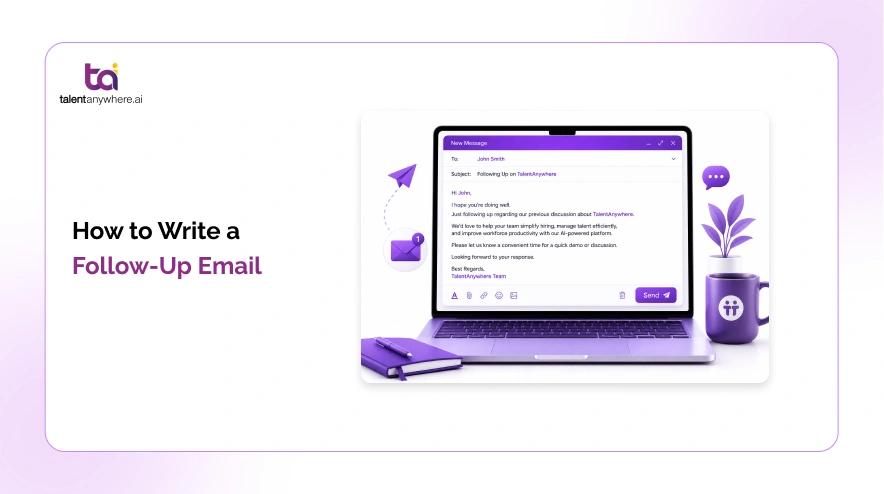
The right follow-up email can change that. The wrong one can quietly hurt your chances. Most candidates default to a vague “just checking in” message that gives the hiring manager nothing to respond to, and get nothing in return. This guide shows you what to do instead: when to send a follow-up email after applying, what to actually say, and three copy-paste templates you can adapt in under five minutes. Before you start sending follow-ups, make sure your resume format is working in your favour — because a great follow-up only works if the application behind it is strong.
Why Most Follow-Up Emails Don’t Get Replies
Hiring managers don’t ignore follow-ups because they’re rude. They ignore them because most are written in a way that makes responding feel like extra work. If your resume isn’t getting shortlisted to begin with, even the best follow-up won’t save you. But when your application is solid, here’s what kills the follow-up:
- “Just checking in on my application.” No context, no specifics, no reason to reply.
- “I wanted to express my continued interest in the role.” Sounds formal but says nothing new.
- “Hi, I applied last Tuesday and haven’t heard back. Could you let me know the status?” Reads as impatient and slightly demanding.
Each version has the same underlying problem: it asks the hiring manager to do all the work — to remember who you are, look up your application, figure out what stage it’s in, and write something back. A version that names the role, references something specific, and asks one easy question is much more likely to get a reply, because it removes friction instead of adding it.
The “Just Checking In” Problem
“Just checking in” is the most common follow-up phrase, and the weakest. It signals that you have nothing new to add. It puts every ounce of work on the reader: they have to remember you, locate your file, and decide what to say. Hiring managers triaging dozens of candidates will quietly move on. Replace the phrase with a sentence that gives them something concrete to react to.
When to Send a Follow-Up Email After Applying
Following up two days after applying reads as impatient. Waiting three weeks reads as an afterthought — by then, decisions have usually been made. The simple rule:
Timing Rules by Hiring Stage
| Hiring stage | When to follow up | Channel |
| After applying | 5–7 business days | |
| After phone / video screen | Same evening or next morning | |
| After final interview | 5–7 business days (or after their stated timeline) |
Timing is half the message: get this right and your email lands in the right mental window.
How Long Should a Follow-Up Email Be?
A long follow-up email doesn’t show you’re invested. It shows you don’t know what to cut. Keep your email under 80 words. The same principle applies to your application — if you’re still working on getting the basics right, a one page resume is the best place to start. A short, confident note signals respect for their time and clear thinking — two of the exact qualities employers want in a new hire.
The 4 Elements Every Effective Follow-Up Email Needs
Every follow-up email that actually gets a response has four things working together:
- A specific subject line
- One concrete detail showing you were paying attention
- A single, clear ask
- A warm but not desperate close
Each one matters. Drop one, and the email starts to feel generic.
A Specific Subject Line That Reminds Them Who You Are
“Following up” is the worst subject line you can use. It’s vague and gets buried. A specific subject line surfaces your application instantly. Two that work:
- Re: Marketing Manager Application, Priya Sharma
- Thank you, Product Designer interview on 14 May
Hiring managers may be juggling 30+ open roles. A subject line that names the position and your name does half the work before they’ve even opened the email.
One Concrete Detail That Shows You Were Paying Attention
This is the line that lifts your email out of the template pile. A small, specific reference signals that you’re a real person who actually read the posting or listened in the interview. Recruiters also verify your background on LinkedIn before interviews — make sure your LinkedIn profile is added to your resume so they can find you instantly.
- Post-application: “The part of the role that focuses on building the first user research function from scratch is exactly the kind of work I want to be doing next.”
- Post-interview: “I’ve kept thinking about your point on shipping fast without breaking trust with enterprise customers. It’s a tension I’ve worked through before.”
One sentence is enough. Don’t oversell.
A Single Clear Ask (Not a List of Questions)
Most candidates either ask nothing — which gives the hiring manager no reason to reply — or stack three questions and expect answers to all of them. The right ask is one, low friction sentence:
- “I’d love to know if there’s a next step.”
- “Could you let me know roughly when I might hear back?”
One ask. Easy to answer in a single line. The easier it is to reply, the more likely you’ll get a reply.
A Warm, Professional Close That Doesn’t Grovel
- Strong: “Thanks again and looking forward to hearing from you.”
- Weak: “Thank you so much for your time and consideration. I really hope you’ll consider me for this opportunity. It would mean so much.”
3 Follow-Up Email Templates You Can Use Right Now
These templates are deliberately short and human. Copy them, then change the names and details. Don’t paste them as is. The personalisation note under each one tells you exactly what to swap.
Template 1: After Applying — No Response After One Week
Email Template
Template 2: After a Phone or Video Screen
Email Template
Template 3: After a Final Interview — No Response for a Week
Email Template
How Many Follow-Up Emails Are Too Many?
Candidates always ask: how many is too many? Here’s a clear answer.
- Two attempts maximum per hiring stage.
- The first is standard and expected.
- The second is appropriate only if the first got no response and another full week has passed — and it should be shorter and approach from a different angle, not repeat the first.
- A third email starts to feel like pressure.
If two well written follow-ups get no reply, take the signal and move on. Use the waiting time productively — a good moment to review whether there are any gaps in your experience you should address. Our guide on how to
If two well written follow-ups get no reply, take the signal and move on. Use the waiting time productively — a good moment to review whether there are gaps on your resume you should address before your next application.
How to Read a Non-Response
SHRM’s 2025 benchmarking puts the average time-to-fill at roughly 36 to 44 days, and senior roles can take over 60. So, a week of silence usually isn’t a no. It’s the middle of a process that’s longer than most candidates expect.
Silence isn’t always rejection. Roles get put on hold. Budgets freeze. ATS systems swallow emails. Hiring managers go on leave. Two clean, well timed follow-ups give you a fair shot. After that, the most productive thing you can do is move your energy to the next opportunity.
If silence is becoming a pattern across several applications, the issue may not be your follow-up at all. It might be the gap between the roles you’re applying for and the skills employers are actually screening for.
5 Follow-Up Mistakes That Hurt Your Chances
1. Following Up Too Soon
Sending a follow-up within two or three business days of applying signals impatience. For any role that values autonomy or async work, it reads as a small red flag before you’ve had a real chance.
2. Sending the Same Email Twice
If your first follow-up didn’t get a reply, sending the same message again doubles down on what didn’t work. The second one should be shorter and approach from a different angle: a quick update, a new piece of relevant work, or a softer one-line nudge.
3. Writing More Than 100 Words
Long emails signal weak prioritisation. Hiring managers are skimming on their phones between meetings. Aim for under 80 words. Every line you cut makes the email stronger.
4. Sounding Desperate or Frustrated
Phrases like “I really need to know” or “I’ve been waiting to hear back” introduce emotional pressure. Even mild urgency is noticeable, and noticeable urgency is off-putting.
5. Using the Wrong Channel
Messaging a hiring manager on LinkedIn, WhatsApp, or by phone when they didn’t invite it is intrusive. Email is the default, unless they specifically suggested otherwise.
One more thing worth checking before you send another application: AI-enhanced resumes are getting 3× more callbacks — make sure yours is keeping up.
One Email Can Change the Outcome
A good follow-up email isn’t a formality. It’s a small, real chance to show the qualities employers are already looking for: clear thinking, respect for someone’s time, and the confidence to ask for what you want without overreaching.
You don’t need to write something brilliant. You need to write something specific, short, and human. Send it at the right moment, ask one clear question, and trust the process.
A great follow-up only works if the application behind it is strong. Before you start sending follow-ups, make sure your resume is doing its job. talentanywhere.ai’s free resume builder helps you create a tailored resume for free — with the formatting and keyword structure that gets you past the first screen and in front of a real person.
When you’re ready for the next role, browse open jobs on top job portals in India and keep every application in one place — so when it’s time to follow up, you’ll know exactly when, where, and what to say.


talentanywhere.ai
Build professional resumes with AI, improve your ATS score, and apply with confidence. talentanywhere.ai empowers job seekers with smarter resume creation and career tools for every stage.
![10 Best ATS Resume Checkers to Improve Your Resume [Free + Paid]](https://www.talentanywhere.ai/wp-content/uploads/2026/09/Hero-10-Best-ATS-Resume-Checkers-to-Improve-Your-Resume-FREE-Paid-1-300x168.webp)