

Table of Contents
 Set as a preferred Google source
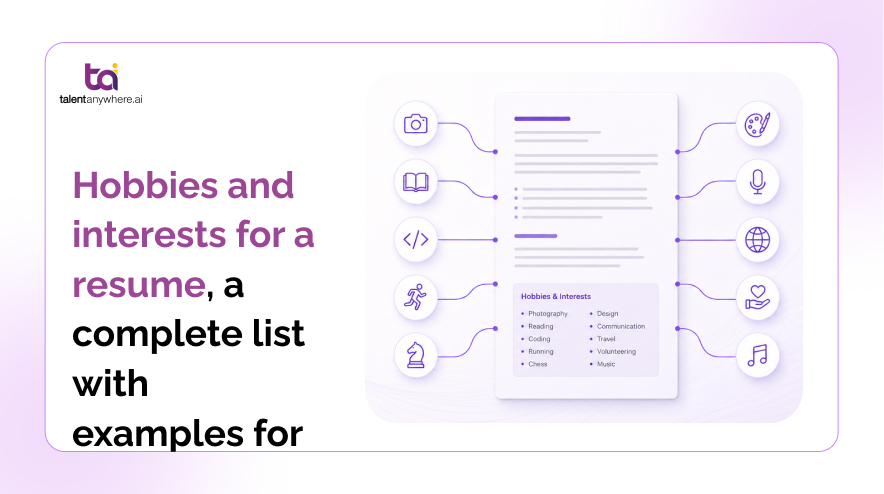
A recruiter spends an average of a few seconds on a resume before deciding whether to keep reading, and the hobbies and interests line is often the last thing they see before making that call. For most job seekers, this section is either left blank, filled with the same three words everyone uses, or skipped out of uncertainty about what belongs there. Done well, hobbies for resume and interests examples can be the one line a recruiter actually remembers. This guide covers what to include, what to leave off, hobbies in resume examples by role and by career stage, and exactly how to choose the ones that work for you.
Should you put hobbies and interests on a resume
Whether to include a hobbies and interests section depends on your experience level, the role you are applying for, and how much space your resume already has. It is rarely the deciding factor in getting shortlisted, but used well, it adds a personal note that a recruiter remembers, and used poorly, it takes up space that could go to something stronger.
When hobbies and interests help
They help most when work experience is thin, such as for freshers and students, since a well chosen hobby can demonstrate a skill the resume cannot show any other way. They also help when two candidates look nearly identical on paper, since a specific, well written interest can be the detail that makes one resume more memorable than the other. Career changers benefit too, since a hobby can quietly signal a transferable skill that the new field would otherwise never see.
When to leave them off
Leave the section off if your resume is already tight on space and every line is carrying real weight from experience and results. Skip any hobby that has no connection to the role and could raise more questions than it answers. And for senior positions, where achievements and scope of responsibility should be doing all the talking, a hobbies section usually adds more clutter than value.
Hobbies vs interests vs area of interest, what is the difference
These three terms get used interchangeably, but they mean slightly different things on a resume, and knowing the difference helps you choose the right heading and the right content underneath it.
What counts as a hobby
A hobby is a specific, regularly practiced activity you do in your free time for enjoyment. It should be concrete enough that someone could ask you a follow up question about it. Long distance running, amateur photography, and playing a musical instrument are hobbies. A vague word like sports is not.
What counts as an interest
An interest is broader than a hobby. It is a subject or area you are curious about, even if you do not actively practice it as a routine activity. An interest in behavioral psychology, personal finance, or sustainable design are all valid, even without a matching activity attached to them.
What area of interest means on a resume
Area of interest is most common on student and fresher resumes, and it usually refers to the subject or domain you want to work in or study further, rather than a hobby at all. It is often placed near the education section rather than at the bottom with hobbies and interests. Area of interest, data analytics and applied machine learning, is a typical example, and it signals direction, not a pastime.
How to choose hobbies and interests that match the job
Choosing well comes down to three things, relevance to the role, specificity, and proof that you actually do it rather than just claim it.
Match the hobby to the skill the role needs
If you are applying for a sales role, a hobby that shows persuasion, networking, or comfort with people works in your favor. If you are applying for a technical role, a hobby that shows problem solving or sustained focus, like coding side projects or chess, does more for you than something unrelated, even if the unrelated hobby is more interesting to you personally.
Prefer specific over generic
Reading tells a recruiter almost nothing. Reading contemporary Indian fiction and writing short reviews on a personal blog tells them you follow through on things and can write. The more specific the line, the more it actually works as a signal instead of filler.
Show it, do not just list it
Wherever possible, attach a scale, a duration, or an outcome. Running becomes trained for eight months and completed a half marathon. Photography becomes maintains a travel photography page with a following built over two years. The difference between a hobby that gets noticed and one that gets skipped over is almost always this detail.
Best hobbies and interests for a resume, and what each one signals
Every hobby signals something, whether or not the person writing it intended it to. Here is a bank of hobbies grouped by what they actually communicate to a recruiter, each with a resume line you can adapt directly.
Hobbies that show leadership and teamwork
Team sports, community event organizing, and volunteering coordination all point to the same thing, the ability to work with and sometimes lead a group.
Example
Hobbies that show creativity
Writing, blogging, photography, painting, and music production all signal original thinking and the ability to produce something from scratch.
Example
Hobbies that show analytical thinking
Chess, coding side projects, puzzle solving, and personal data tracking all point to structured, logical thinking under constraints.
Example
Hobbies that show communication and people skills
Public speaking, tutoring, debate, and community teaching all signal comfort explaining ideas clearly to other people.
Example
Hobbies that show discipline and drive
Marathon running, martial arts, learning an instrument, and structured fitness training all point to consistency over a long period, which is harder to fake than almost anything else on a resume.
Example
Hobbies and interests examples by role
The strongest hobbies and interests are the ones tailored to the kind of role you are applying for. Here are examples grouped by common roles and functions.
Freshers and students
Organizing college fests, participating in inter college competitions, or running a small student initiative all work well here, since they substitute for the work experience a fresher does not yet have.
Example
Teachers
Storytelling, craft based hobbies, and coaching a sport all connect naturally to a classroom setting.
Example
Engineers
Personal coding projects, open source contributions, robotics, and structured hobbies like chess all reinforce a problem solving profile.
Example
HR and recruiters
Mentoring, community volunteering, and book clubs focused on people or workplace topics reinforce a people first profile.
Example
Sales and marketing
Content creation, personal brand building on social platforms, and organizing or attending networking events all signal comfort with visibility and persuasion.
Example
Cabin crew and customer facing roles
Learning new languages, hospitality related hobbies, and independent travel all connect directly to a customer facing role.
Example
Also Read More How AI Enhanced Resumes Get 3X More Interview Callbacks
Hobbies and interests for freshers and students
Freshers and students have the most to gain from this section, since it often carries weight that experience would carry on any other resume.
Why freshers should include them
With little or no formal work history, a well written hobbies and interests section fills a real gap. It gives a recruiter evidence of initiative, consistency, or a specific skill, even when there is no job title to point to yet.
Example
What to write when you have no experience
If you genuinely have no hobby that fits neatly, look at coursework, personal projects, or student activities you already did but never thought to frame as a hobby. Organizing a class assignment into a small side project, running a WhatsApp group that shared placement resources, or building a simple personal website all count, and all show more than a blank section would.
How to write the hobbies and interests section
How you write this section matters almost as much as what you choose to put in it.
Where to place it and how long it should be
Place it near the bottom of the resume, after skills and education, since it should never compete with your strongest material for attention. Two to four lines is usually enough. A single long paragraph reads as filler, and a bare list of one word entries reads as an afterthought.
Wording that reads well
Write each line the way you would answer if a recruiter asked about it out loud. Avoid stock phrases like passionate about or avid reader, since they add words without adding information. Where you can, attach a number, a duration, or a specific detail, since that is what makes a line believable rather than generic.
Making it ATS friendly
Keep the section as plain text under a standard heading, such as hobbies and interests or interests, rather than inside an image, icon set, or graphic, since applicant tracking systems generally cannot read text embedded in graphics. A simple heading followed by short lines or a comma separated list parses cleanly through almost every ATS in use today.
Your hobbies say more than you think. Make sure your resume does too.
Build a resume with talentanywhere.ai and add the right interests in one click.
Hobbies and interests to avoid on a resume
Some entries do more harm than good, either because they say nothing or because they open a door you would rather not walk through in an interview.
Too generic or passive
Watching movies, listening to music, and reading, written on their own with no specificity, tell a recruiter nothing about you that millions of other applicants could not also claim.
Potentially controversial
Politics, religion, and contentious social causes are best left off a resume entirely, since they risk creating a bias, positive or negative, that has nothing to do with your ability to do the job.
Anything you cannot talk about in an interview
If a hobby is listed, assume a recruiter will ask about it, and be ready to talk about it for at least a minute with genuine detail. A hobby you cannot discuss convincingly does more damage than one you leave off.
Also Read More Best Online AI Resume Builders, Top Picks for 2026
60 hobbies and interests you can copy into your resume
Use this list as a starting point, then make your chosen entry more specific using the guidance above. Common section headings you can use instead of hobbies and interests include interests, personal interests, and extracurricular interests.
Creative writing, blogging, photography, painting, sketching, graphic design, music production, playing a musical instrument, singing, filmmaking, creative writing, calligraphy, pottery, content creation.
Sports and fitness running, marathon training, cycling, swimming, badminton, cricket, football, basketball, yoga, martial arts, trekking, gym and strength training, table tennis, chess as a competitive sport.
Intellectual and analytical reading nonfiction, coding side projects, puzzle solving, chess, quizzing, debating, competitive programming, personal finance and investing, data analysis as a hobby, learning new languages.
Social and community volunteering, mentoring, tutoring, organizing community events, coaching a youth team, running a book club, participating in NGOs, public speaking clubs.
Technical and skill based robotics, 3D printing, open source contributions, building personal projects, app development, electronics and DIY projects, video editing.
Outdoor and travel solo travel, backpacking, hiking, birdwatching, gardening, camping, adventure sports, cultural exploration through travel.
Small section, big impression.
Put your interests to work with the talentanywhere.ai resume builder.
Conclusion
The hobbies and interests section rarely gets a resume shortlisted on its own, but it is often the smallest section with the biggest chance to be remembered. Choose something specific, tie it to the role where you can, and be ready to talk about it, and it earns its place on the page instead of sitting there as filler.
FAQs
What are good hobbies to put on a resume?
Should freshers add hobbies and interests to a resume?
What is the difference between hobbies and interests on a resume?
What is area of interest in a resume?
How many hobbies should you list on a resume?
Is watching movies or TV a hobby you can list?


talentanywhere.ai
Build professional resumes with AI, improve your ATS score, and apply with confidence. talentanywhere.ai empowers job seekers with smarter resume creation and career tools for every stage.